Showing posts with label Logistics company Logistics Solutions. Show all posts

Friday, April 2, 2021

Factors that will Drive the Growth of Logistics Companies in India

Logistics is a vital component for the economic development and growth of any country. The logistics industry helps to ensure smooth, quick, efficient and economical movement of goods across the country. It also boosts international trade. Logistics companies in India utilize technology, infrastructure and manpower to provide economized and high-quality logistic services. 

The Indian logistics industry has moved from being just a supporting service sector to an essential and mainline sector. The logistics market in India is expected to grow at a CAGR of 10.5% between 2019 and 2025. With the Indian logistics industry being highly unorganized, logistic companies need to embrace various technologies and measures to implement digitization in processes to ensure growth.

Few key trends that are driving the growth of the Indian logistics industry are:


· Increased retail e-commerce market

· The rise in the number of tech-savvy users and businesses

· Demand for same-day and next-day delivery timelines

· Usage of AI technology such as chat bots for customer support

· Adoption of technology for real-time monitoring and route optimization

· Implementation of end-to-end automation

· Grant of infrastructure status to logistics

· Establishment of new economic corridors and better road infrastructure

· Government initiatives to push for digital technology

· More support for Indian flagships

· Indian government’s commitment to sustainability and utilization of green energy

Top logistics companies in India are adopting the latest technology in an attempt to be a forerunner in providing top-notch logistic services. Technology such as artificial intelligence and machine learning is being used to make operations more fast and cost-effective. 

Robotics and technology such as drones are the future of the logistics sector and are expected to offer better convenience and shorter-delivery cycles to the customers. Increased usage of blockchain, AI, IoT and smart sensor applications would ensure smooth and transparent operations with real-time data to make quick decisions.

Safexpress is a supply chain and logistics service provider that facilitates logistics for different business domains which range from apparel and lifestyle, e-commerce, healthcare, automotive, engineering, FMCG, consumer electronics and many more.  

They offer a wide range of innovative supply chain services to individuals, SMEs and enterprises. Their service expertise also includes express distribution, 3PL and supply chain consulting.

Major Challenges Faced by a Logistics Company in India


· The predominant mode of transport is via road and rail, leading to over-saturation and high tariffs

· Rules and regulations are enforced differently by national, regional and local authorities

· The absence of proper port facilities leads to overcrowded berths and delay in cargo evacuation

· Lack of integration in transport networks, poor warehousing and distribution facilities

· The slow transition to technological advances such as RFID, tracking, warehouse management system by logistics companies

· Lack of skilled manpower and training institutions for the logistics industry

· Absence of proper infrastructure for storage of perishables and refrigerated items

· The absence of end-to-end supply chain visibility

· Competition with global logistic players

· Increasing fuel costs

In Conclusion


The logistics company in India will evolve over the next few years with more emphasis on data mining. Data mining will help in accessing historical data, predicting market trends and ensuring customer satisfaction. The Union Budget 2021-22 has increased the infrastructure spending significantly with the focus on new economic corridors, improved roads, railway infrastructure and digitization. 

These changes will aid in the swift movement of goods and improve turnaround time. Logistics companies need to adopt technical solutions to compete and provide better service to their customers.

Wednesday, January 27, 2021

A brief overview of the automotive logistics industry in India

Automotive logistics refers to the warehousing and transportation of spare parts, production material and finished vehicles in the automotive supply chain.  The automotive logistics industry is fragmented in nature, with the presence of large global players as well as medium-sized and small-sized local players. 

Most of the global logistics players have an automotive logistics division to meet the market needs and demand. Local players are increasingly enhancing their capabilities in terms of inventory handling, service offerings, products handled, and technology, to cater to the automotive industry.

The automotive industry is constantly evolving, and with the introduction of electric vehicles, the demand for automotive logistics is constantly increasing. And any forward-thinking logistics company in India needs to develop supply chain strategies, in order to exploit new market opportunities, reduce costs, and maintain competitive advantage. 
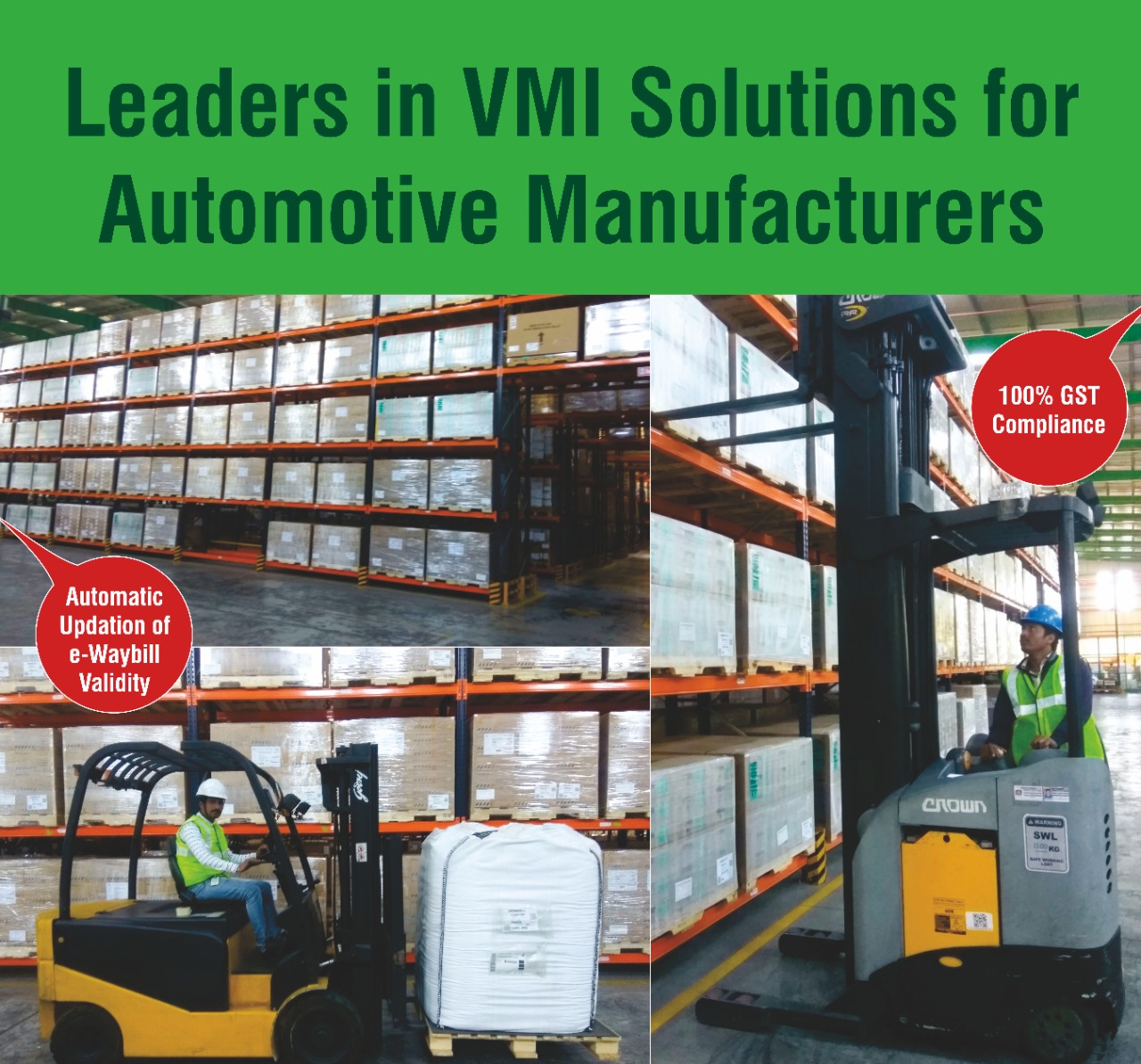
Safexpress, a leading logistics provider, with its vendor managed inventory are able to maintain high level, detailed view of stocks available at the vehicle manufacturer and also ensures coordination with OEMs to maintain sufficient stock of components. The transportation management system of Safexpress is able to provide customers with visibility and real-time data of their deliveries. The ‘Express Distribution’ service of Safexpress is able to serve dealers and centers across the country with the required parts thus ensuring on-time deliveries.    

Types of automotive logistics

The market for automotive logistics has been segmented into finished vehicle and automobile parts. The automobile parts segment leads the market, which includes revenue generated from the logistics of spare parts from both the automobile manufacturer as well as aftermarket. Owing to stringent regulations related to carbon emission, a market for upgraded standard aftermarket parts for the existing vehicle fleet has been generated. This has helped in supporting the growth of the automobile parts’ segment.

The finished vehicle segment includes the revenue generated from the logistics of the finished vehicle. And this segment is estimated to expand owing to the rising demand for low emission vehicles and electric vehicles. This demand is attributed to favorable government initiatives, which include the availability of tax relief from the purchase of these vehicles. The rising demand for electric vehicles is also expected to boost the finished vehicle segment growth.

Transformation of Indian automotive logistics


The Indian automobile industry is a major contributor to the Indian economy and the fourth largest automobile market in the world. The Indian automotive supply chain is undergoing various changes like regulatory demand of BSVI engines and promoting the usage of electric vehicles. 

The industry is experiencing change in existing logistics trends, automation and on-time delivery demand, with major changes in the modes of transport used for freight transport and infrastructure support. While the main mode of transport for automotive logistics is by road, initiatives to use rail, water or air modes are increasing, as they help to lower overall costs.

Automotive logistics providers are also investing in technologies like Big Data and Connected Ship, to enhance their supply-chain management processes. These technologies aid in reducing labor costs, by making use of predictive assessment on routing, which eliminates delays in shipments.

In conclusion

The automotive logistics industry is expected to witness massive growth by improving connectivity, distribution networks and implementing new technology to track shipments. Earlier, automobile manufacturers incurred high cost of inventory due to the storage of automotive components and systems. 

Now, by adopting strategies like Just in time (JIT), they can eliminate the cost related to all sources, unnecessary inventory and scrap in production. Implementation of JIT is done with the help of an effective supply chain and an efficient automotive logistics system.

Friday, January 1, 2021

How logistics companies in India managed operations continuity amid COVID-19


COVID-19 pandemic stunned the world economies on a short notice and affected smooth operations of big and small businesses in all sectors as it scaled. But even in those unprecedented times, there were some essential industries such as logistics, where companies were operational on the field bearing risk of virus everyday. 
As the time moved, it was understood that the only choice left was to ‘live with the virus’ while staying safe from it. 

One of the top logistics companies in India, Safexpressadroitly managed business continuity to ensure stable, secure and effective work flows in such challenging times by working in a pro-active and planned manner.

The company ensured utmost safety of its staff and retained the custodianship of customers’ consignments during the pandemic. The quick decision making, continued connect through internal & external communications and swift actions really changed the current adversity into opportunity for Safexpress.


On the ground level, practical challenges were often faced by the team such as employees turning up with sub-optimal health conditions that disrupted the planned roster. Working on a skeletal team made it challenging to achieve operations efficiencies, but the challenges were seized when the government released the APIs for the Arogya Setu app, Safexpress took the opportunity of unifying the application with Arogya Setu that helped immensely to track the health and risk profile of employees on real-time basis. This allowed better planning as it was able to keep a check on employees at risk in the roster and avoid last minute confusions.


To execute smooth operations continuity in all the regions amidst the crisis, Safexpress prioritize its critical resources i.e. workforce, network, partners and ensured their continuity by providing 100% safe & healthy environment and development without any compromise with clear objectives in mind to serve its customers' supply chain and logistics needs and to support the country's economy by keeping it's wheels running.


It also digitally transformed its operations & transactions to minimize the risk of physical contact and incorporated cloud-based systems that facilitated Work From Home for most of the workforce. Safety & security of employees, staff, premises and customers’ consignments was ensured by ‘no-contact’ deliveries, promoting digital payments, regular sanitization, daily thermal screening of those coming at work and religiously following all the guidelines mandated by the Government of India.


The ongoing pandemic has changed the delivery operations for the entire industry including the top 10 logistics companies in India, if not forever but for a long time coming. To avoid the spread of COVID-19, customers today are shifting their loyalty towards businesses that are guaranteeing ‘zero contact’ delivery and digital payments. Logistics companies in India have planned out their execution of operations based on the same idea as it its new but fortunately, not hard to achieve.

Reasons Causing the Growth of Logistics Service in India

  A well-organised logistics is an essential part that ensures the smooth functioning of the end-to-end supply chain possible. An efficient ...