Showing posts with label Automotive logistics industry. Show all posts

Friday, April 9, 2021

Is Reverse Logistics Becoming the Need of the Hour in India?

The growth of the e-commerce industry has led to an increase in the demand for reverse logistics. With customers expecting quick and easy return policies for their products, a strong and viable reverse logistics system needs to be put in place to ensure customer satisfaction and brand loyalty. Reverse logistics deals with the movement of goods from the customer to the seller or manufacturer. 

Reverse logistics is used when goods are moved from their final destination to another location to recapture value or for final disposal. With the booming growth of the Indian e-commerce industry, reverse logistics in India has become even more relevant due to real-time feedback and returns initiated by customers.


The Five Rs of Reverse Logistics

Customer satisfaction involves both deliveries of goods and also the return of goods from the customer in a timely and speedy manner. It would not be wise to keep customers waiting for the pick-up of returned goods. Reverse logistics can be categorised into five areas:

1. Returns

Returns are the first stage of the reverse logistics flow process. Products may be returned for a variety of reasons and a process needs to be in place to receive, inspect and test the products returned by the customers.

2. Recalls

Recalls involve removing a product from the market due to a defect or potential hazard. Recalls need to be handled quickly and delicately to avoid accident or liability concerns. Although recalls create a negative customer experience, a business’s initiative to remove bad goods from the market eventually increases brand trust among customers.

3. Recycling

Recycling of products enables companies to implement minimal wastage of resources and also focus on sustainability. Customers are becoming increasingly aware of environmental issues and care if a product is eco-friendly or not. Now, people are even willing to pay more for eco-friendly products.

4. Repackaging

After a returned product is tested and found to be in perfect working condition, it can be repackaged and returned to stock.

5. Repair

Products that are returned due to small faults or damages are repaired or their functional parts are harvested for re-use. Repaired products can be repackaged and sold in secondary markets.

Advantages of Reverse Logistics

Increased online buying leads to higher product returns for which businesses need to establish a framework for reverse logistics. Logistic services in India are coming up with new approaches to implement reverse logistics. The majority of businesses have started to share the cost of reverse logistics with their logistics partners to retain brand support and ensure sustainability.

Safexpress, a market leader in supply chain and logistics, has expertise in effective management of reverse logistics through their various processes and REVLOG system designed to automate the process thus ensuring reverse logistics to be easy and timely. Safexpress have process set in place to handle procedures like returns, documentation and taxation requirements, repacking and redistribution of products effectively.

 Some advantages of reverse logistics are:

· Better profit margins and reduced wastage as the returned product can be recycled and resold.

· Increased customer satisfaction and a better brand image.

· Availability of product data to correct issues that might have caused the return of the product.

· Opportunity to implement environment-friendly sustainable practices.


Conclusion

Reverse logistics in India is becoming more relevant due to the exponential growth of the e-commerce market in the country. With the Indian government giving importance to sustainability and minimization of e-waste, reverse logistics is fast becoming a crucial element in supply chain management.

Source:-https://www.reddit.com/user/safexpress1/comments/mnz4qd/is_reverse_logistics_becoming_the_need_of_the/

Wednesday, January 27, 2021

A brief overview of the automotive logistics industry in India

Automotive logistics refers to the warehousing and transportation of spare parts, production material and finished vehicles in the automotive supply chain.  The automotive logistics industry is fragmented in nature, with the presence of large global players as well as medium-sized and small-sized local players. 

Most of the global logistics players have an automotive logistics division to meet the market needs and demand. Local players are increasingly enhancing their capabilities in terms of inventory handling, service offerings, products handled, and technology, to cater to the automotive industry.

The automotive industry is constantly evolving, and with the introduction of electric vehicles, the demand for automotive logistics is constantly increasing. And any forward-thinking logistics company in India needs to develop supply chain strategies, in order to exploit new market opportunities, reduce costs, and maintain competitive advantage. 
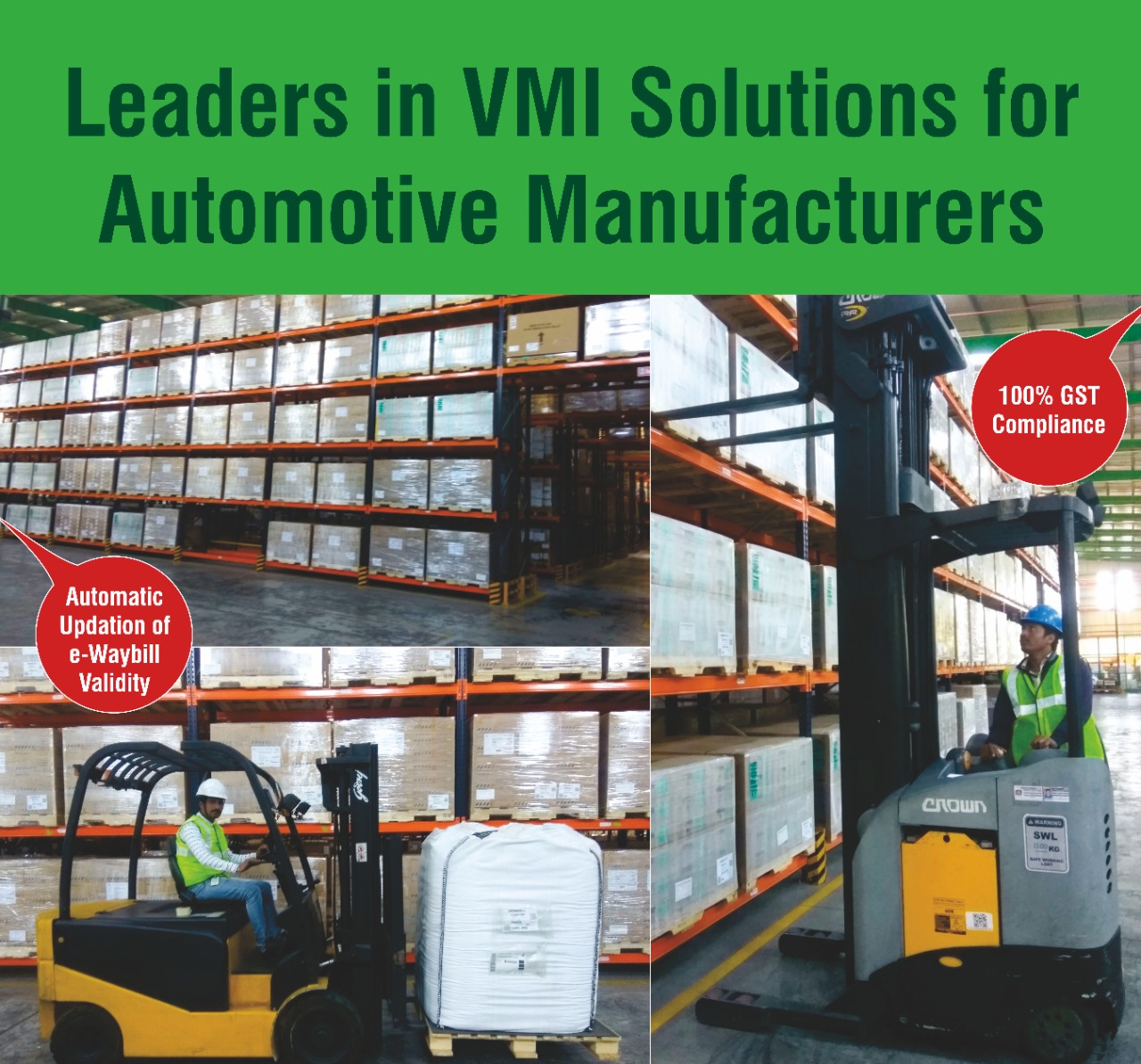
Safexpress, a leading logistics provider, with its vendor managed inventory are able to maintain high level, detailed view of stocks available at the vehicle manufacturer and also ensures coordination with OEMs to maintain sufficient stock of components. The transportation management system of Safexpress is able to provide customers with visibility and real-time data of their deliveries. The ‘Express Distribution’ service of Safexpress is able to serve dealers and centers across the country with the required parts thus ensuring on-time deliveries.    

Types of automotive logistics

The market for automotive logistics has been segmented into finished vehicle and automobile parts. The automobile parts segment leads the market, which includes revenue generated from the logistics of spare parts from both the automobile manufacturer as well as aftermarket. Owing to stringent regulations related to carbon emission, a market for upgraded standard aftermarket parts for the existing vehicle fleet has been generated. This has helped in supporting the growth of the automobile parts’ segment.

The finished vehicle segment includes the revenue generated from the logistics of the finished vehicle. And this segment is estimated to expand owing to the rising demand for low emission vehicles and electric vehicles. This demand is attributed to favorable government initiatives, which include the availability of tax relief from the purchase of these vehicles. The rising demand for electric vehicles is also expected to boost the finished vehicle segment growth.

Transformation of Indian automotive logistics


The Indian automobile industry is a major contributor to the Indian economy and the fourth largest automobile market in the world. The Indian automotive supply chain is undergoing various changes like regulatory demand of BSVI engines and promoting the usage of electric vehicles. 

The industry is experiencing change in existing logistics trends, automation and on-time delivery demand, with major changes in the modes of transport used for freight transport and infrastructure support. While the main mode of transport for automotive logistics is by road, initiatives to use rail, water or air modes are increasing, as they help to lower overall costs.

Automotive logistics providers are also investing in technologies like Big Data and Connected Ship, to enhance their supply-chain management processes. These technologies aid in reducing labor costs, by making use of predictive assessment on routing, which eliminates delays in shipments.

In conclusion

The automotive logistics industry is expected to witness massive growth by improving connectivity, distribution networks and implementing new technology to track shipments. Earlier, automobile manufacturers incurred high cost of inventory due to the storage of automotive components and systems. 

Now, by adopting strategies like Just in time (JIT), they can eliminate the cost related to all sources, unnecessary inventory and scrap in production. Implementation of JIT is done with the help of an effective supply chain and an efficient automotive logistics system.

Reasons Causing the Growth of Logistics Service in India

  A well-organised logistics is an essential part that ensures the smooth functioning of the end-to-end supply chain possible. An efficient ...